
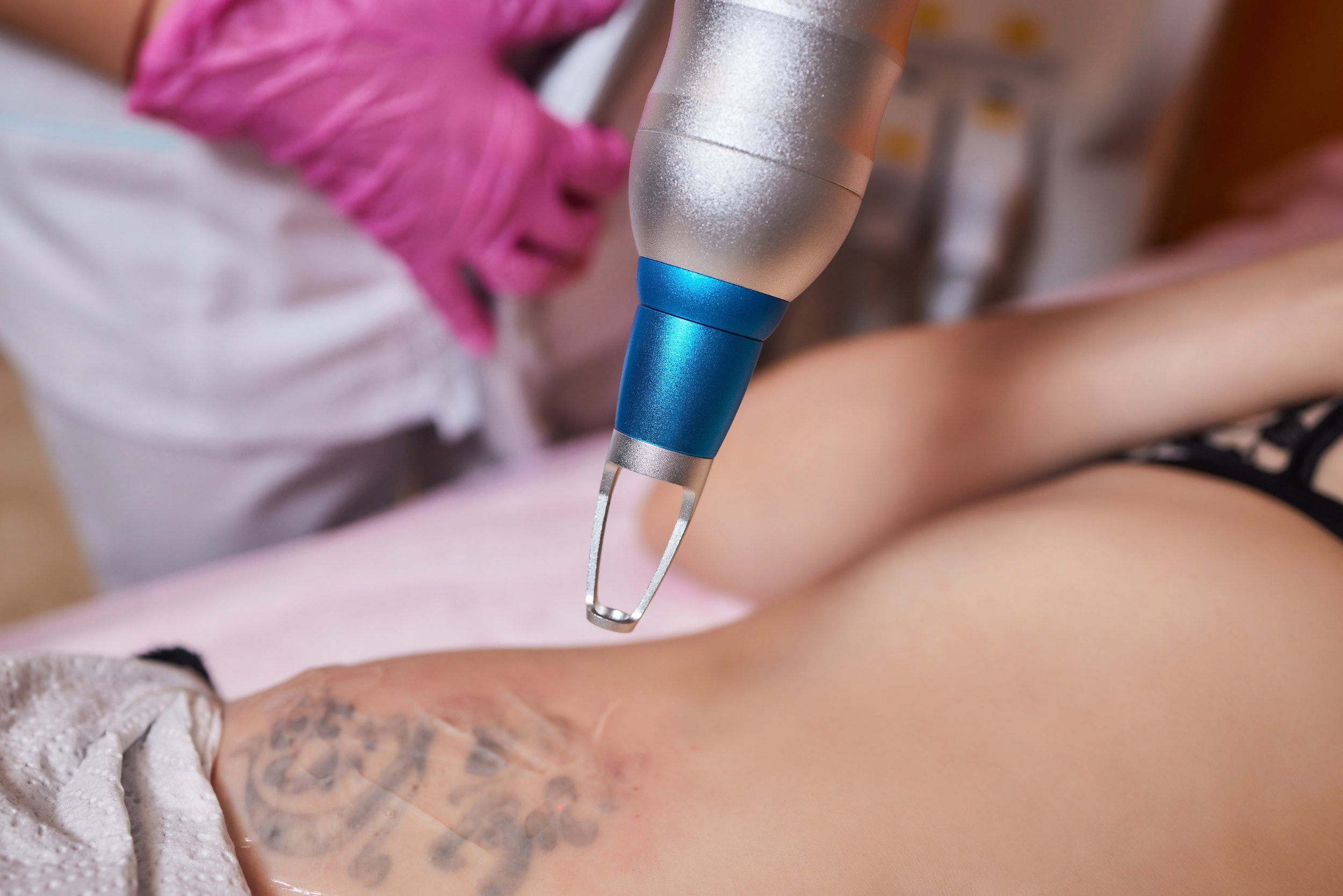
Tattoo Removal in Warrington
If you have a tattoo you no longer want, would like to fade an existing design before a cover-up, or simply want to understand your options, SkinFirst offers professional laser tattoo removal in Warrington using the UltraLux Pro.
Every tattoo is different. Its colour, age, depth, size, location and the type of ink used can all influence how it responds to treatment.
That is why your tattoo removal journey starts with a consultation and assessment, allowing us to look at the tattoo, discuss what you would like to achieve and create a treatment plan specifically for you.
Professional Laser Tattoo Removal With UltraLux Pro
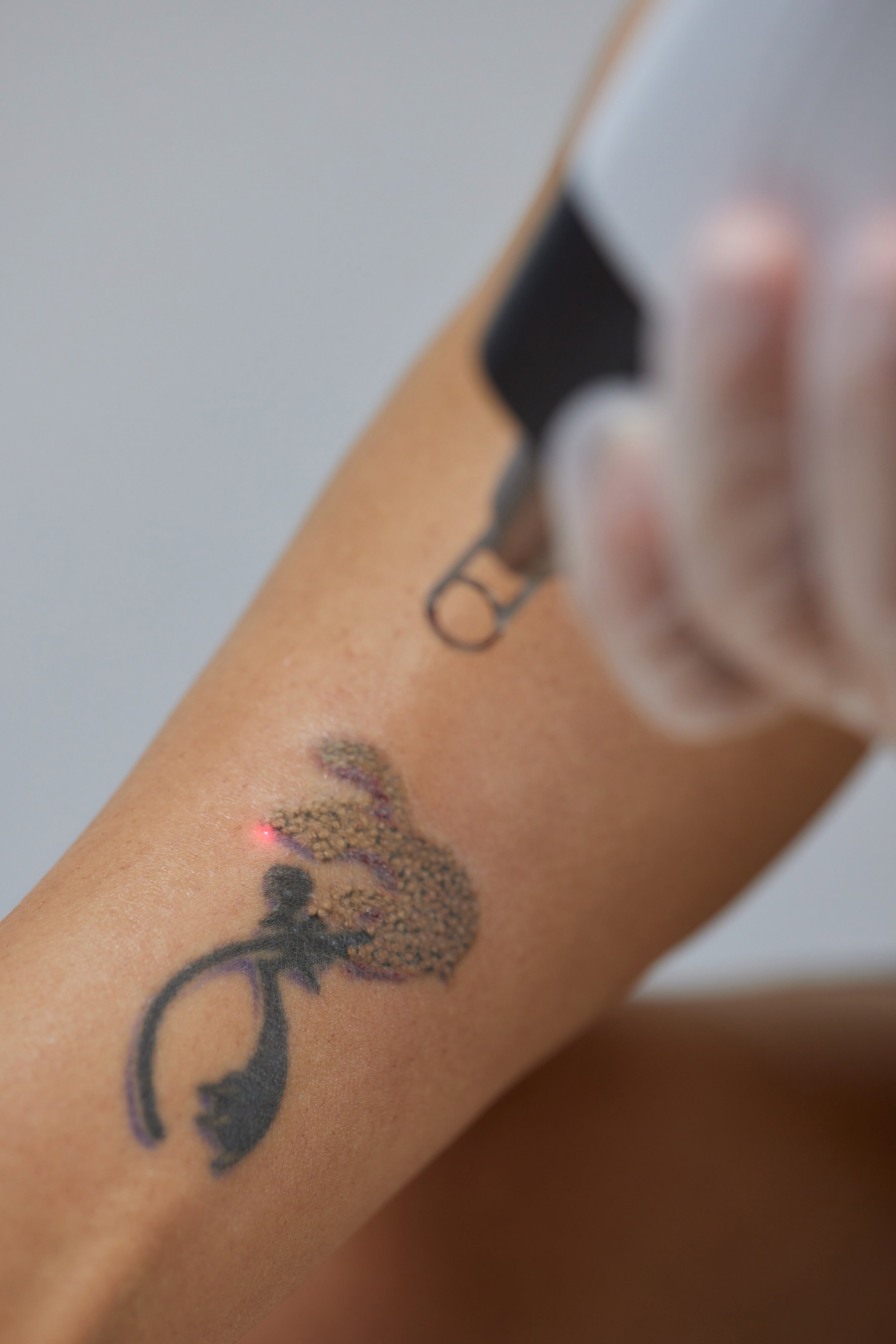
Tattoo ink sits beneath the surface of the skin, which means it cannot simply be removed with skincare or surface treatments.
Laser tattoo removal works by delivering very short pulses of targeted light energy into the tattoo pigment.
The ink absorbs this energy and breaks into smaller particles. Over the weeks following treatment, your body gradually clears those fragments, causing the tattoo to become lighter over time.
This process happens gradually, which is why tattoo removal usually requires a course of treatments rather than one appointment.
How Does Laser Tattoo Removal Work?
At SkinFirst, tattoo removal is performed using the UltraLux Pro, an advanced multi-treatment platform that includes professional tattoo removal as one of its dedicated applications.
The system uses Q-switched Nd:YAG laser technology with different wavelengths, allowing a broad range of common tattoo pigments to be targeted. The UltraLux Pro manufacturer specifically positions the device for professional tattoo removal across a broad range of ink types and colours.
For us, the most important part is not simply having the technology.
It is assessing the tattoo correctly and choosing a treatment approach based on the individual.
Tattoo Removal With UltraLux Pro
Tattoo Removal FAQs
-
Laser tattoo removal may be used for many different tattoos, including:
Professional tattoos
Amateur tattoos
Black and dark-coloured tattoos
Selected coloured inks
Tattoos you want fully removed
Tattoos you would simply like faded
Tattoos being lightened before a cover-up
Different colours respond differently to laser energy.
Darker inks such as black and dark blue often absorb laser energy particularly well, while some brighter pigments can take longer and may require more sessions. NHS laser guidance similarly notes that colour, ink type and depth all influence how easily a tattoo fades.
Your consultation gives us an opportunity to assess the tattoo and explain what we think is realistically achievable.
-
You do not necessarily need to remove a tattoo completely.
Some patients simply want an existing design lightened enough for their tattoo artist to create a new cover-up.
Others want to work towards as much clearance as possible.
Your goal will influence your treatment plan, and we can discuss this from the beginning.
Complete Tattoo Removal
Best suited to:
Patients who would like to gradually reduce the visibility of an unwanted tattoo as much as possible.Tattoo Fading for a Cover-Up
Best suited to:
Patients who want to lighten an existing tattoo so their tattoo artist has more flexibility when creating a new design. -
There is no single number that applies to every tattoo.
The number of treatments required can depend on:
Tattoo size
Ink colours
Depth of the pigment
Whether it was professionally or amateur applied
Age of the tattoo
Location on the body
Previous removal attempts
Your individual skin and healing response
Laser centres commonly report that multiple sessions are needed, with treatment courses often extending over several months because the body needs time to clear fragmented pigment between appointments.
During your consultation, we can give you a more realistic idea of what your individual tattoo may require.
We would much rather give you an honest treatment plan than promise that a tattoo will disappear in a set number of sessions.
-
Your first step is a consultation at SkinFirst in Warrington.
We will discuss:
The tattoo you would like treated
Whether you want removal or fading
Your medical history
Your skin type
Tattoo colours
Tattoo age
Previous removal treatment
What result you are hoping to achieve
Potential risks and aftercare
Where required, an appropriate patch test will be carried out before a full treatment session.
During treatment, the laser is directed precisely towards the tattooed area.
The sensation varies between patients and can feel hot or sharp for a very brief moment as the laser pulses are delivered.
Treatment time will depend on the size and complexity of the tattoo.
-
It is normal for the treated skin to react temporarily following laser tattoo removal.
You may experience:
Redness
Swelling
Tenderness
Temporary whitening or frosting of the tattoo
Mild blistering
Crusting or scabbing
Temporary changes in skin colour
These effects usually settle as the area heals.
Pigment changes can occasionally last longer, particularly in darker or easily tanned skin types. Scarring is also a recognised but less common risk.
You will be given clear aftercare instructions following treatment to help the area heal properly and reduce the risk of complications.
-
Tattoo removal treatments cannot be rushed.
After each session, your body needs time to clear fragmented ink and the skin needs time to recover before the next treatment.
The exact interval will depend on your individual response and treatment plan.
Spacing treatments appropriately is important both for results and for the health of the skin.
-
Sometimes a very high level of clearance can be achieved, but complete tattoo removal can never be guaranteed.
How much a tattoo fades depends on many factors, including:
Ink colour
Ink quality
Depth
Density of pigment
Tattoo age
Skin type
Location
Your individual response to treatment
Some tattoos respond extremely well, while others may leave a faint shadow or residual pigment.
That is why we focus on realistic expectations from the very first appointment.
-
Laser tattoo removal is widely used, but it is still an energy-based treatment and should be carried out with appropriate training, safety measures and aftercare.
Potential risks can include:
Temporary redness and swelling
Blistering or crusting
Hyperpigmentation
Hypopigmentation
Infection
Scarring
The British Medical Laser Association highlights the importance of appropriate laser training, equipment standards and practitioner safety procedures for tattoo removal treatments.
At SkinFirst, suitability, risks and aftercare will always be discussed before you decide to proceed.
-
Tattoo removal is not simply about pointing a laser at ink.
A good treatment plan starts with assessing:
The tattoo itself
Your skin
What you want to achieve
How the tattoo is responding between sessions
SkinFirst is a nurse-led medical aesthetics and skin clinic in Warrington, with a focus on careful assessment, honest advice and personalised treatment.
We will explain:
What we think is realistically achievable
How many sessions may be needed
How your tattoo is responding
Whether treatment intervals need adjusting
When it is appropriate to continue or pause treatment
You will never be promised a result that cannot be guaranteed.