

Profhilo Structura Treatment in Warrington
Profhilo Structura is an injectable treatment designed to address age related changes within the deeper tissues of the face, with a particular focus on facial adipose tissue.
While traditional Profhilo is used primarily to improve hydration, firmness, elasticity and overall skin quality, Profhilo Structura works at a different level.
It may be considered when changes within the facial fat compartments have started to affect the support, shape or appearance of the mid face.
At SkinFirst in Warrington, every Profhilo Structura treatment begins with a detailed consultation. Nurse Jenni will assess your skin, facial structure and the changes you have noticed before deciding whether Structura, standard Profhilo or another treatment is most appropriate for you.
Support Deeper Facial Changes Without Changing Who You Are
Profhilo Structura at a Glance
Best suited to:
Age related changes within the mid face, changes in facial support and selected changes within the superficial facial fat compartments.
Results:
Gradual, natural looking improvement in facial support and tissue quality.
Common treatment areas:
Face, with particular focus on selected areas of the mid face.
Downtime:
Usually minimal, although temporary swelling, tenderness, redness or bruising can occur.
Initial treatment course:
Typically two treatments around four weeks apart. The exact plan will be confirmed following assessment. A clinical study of Profhilo Structura used two sessions 30 days apart.
Consultation required:
Yes. Facial anatomy, medical history, suitability and treatment goals must be assessed before treatment.
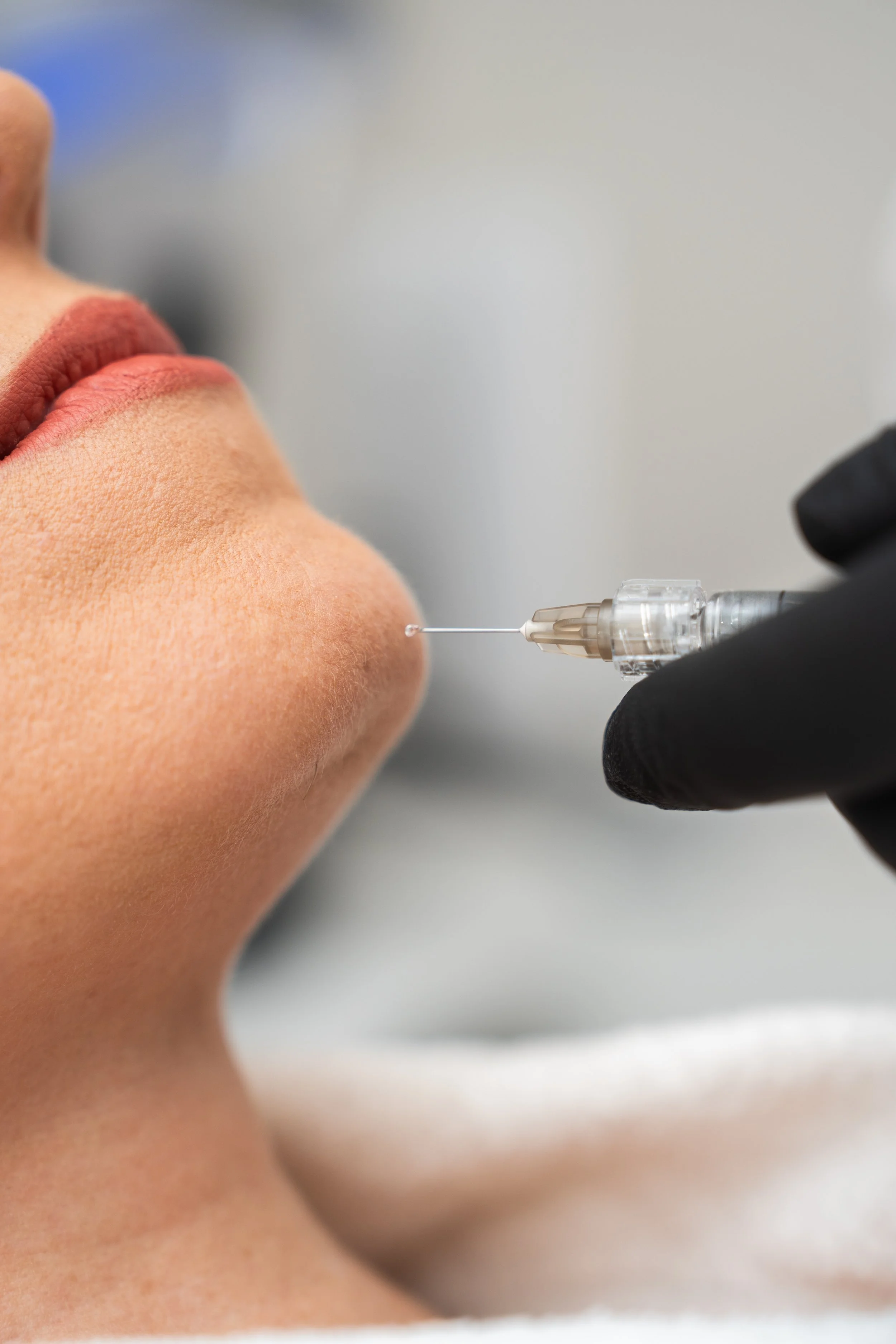
The name understandably causes a little confusion.
Profhilo Structura belongs to the same Profhilo family as traditional Profhilo, but it is not simply a stronger version of the original treatment.
Traditional Profhilo focuses predominantly on skin quality. It is designed to improve hydration, elasticity, firmness and mild skin laxity.
Profhilo Structura has been developed to act within deeper facial tissues and specifically address age related changes involving facial adipose tissue. IBSA describes it as a formulation created for the restoration of adipose tissue in response to facial ageing.
The treatment choice therefore comes down to where the visible change is coming from, rather than which product sounds more powerful.
Profhilo Structura Is Not Simply a Stronger Profhilo
Profhilo Structura is an injectable hyaluronic acid treatment from the Profhilo family.
Like traditional Profhilo, it uses IBSA’s NAHYCO technology, based on cooperative hybrid complexes of hyaluronic acid. However, Structura has been developed with different physical properties and a different intended treatment depth.
It is placed within selected superficial facial fat compartments rather than being used predominantly within the skin.
These fat compartments form part of the underlying support of the face and can change as we age.
The aim is not to create obvious volume or dramatically alter your features.
Instead, Profhilo Structura provides another way of addressing facial ageing where the visible change is linked to deeper tissue rather than skin quality alone.
What Is Profhilo Structura?

Put Your Skin First
Profhilo Structura is not about trying to recreate a younger version of your face or adding unnecessary volume.
It is about understanding how your own face has changed and deciding whether supporting the deeper tissues could form part of a subtle, personalised treatment plan.
Book your consultation at SkinFirst in Warrington to discover whether Profhilo Structura is right for you.
Profhilo Structura FAQs
-
Facial ageing happens at several different levels.
Changes occur within the skin, but they can also occur within the fat, ligaments, muscle and bone beneath it.
Profhilo Structura may be considered where deeper age related changes are contributing to concerns such as reduced support through the mid face, flattening around the cheeks, changes in facial contour or a general feeling that the face looks less supported than it once did.
It may be particularly relevant when a patient tells us:
“My cheeks look flatter than they used to.”
“My face seems to have changed shape.”
“I feel like everything has started to drop slightly.”
“I look tired even when I’m not.”
These concerns do not automatically mean you need Profhilo Structura.
They simply indicate that we may need to look beyond the surface of the skin when assessing what has changed.
-
The fat within the face is not one continuous layer.
It is organised into separate compartments that sit at different depths and contribute to facial shape and support.
As we age, these compartments can change in volume, position and behaviour.
Some areas may become thinner or lose support, while other changes elsewhere in the face can contribute to heaviness or descent.
This can alter the relationship between the cheeks, lower face and surrounding tissues.
Profhilo Structura was specifically developed around this aspect of facial ageing, with research evaluating its placement within the superficial facial fat compartment.
This is also why facial assessment matters.
What looks like simple skin sagging from the outside may actually involve several different tissue layers.
-
The easiest way to understand the difference is to think about skin quality versus deeper structure.
Traditional Profhilo is primarily used when the concern is the skin itself.
That might include dehydration, reduced elasticity, mild laxity, crepey texture or skin that has lost some of its usual firmness and bounce.
Profhilo Structura is designed for deeper age related changes involving facial adipose tissue.
So if your skin quality is the main concern, standard Profhilo may make more sense.
If Nurse Jenni identifies deeper changes within the facial tissues, Profhilo Structura may be worth considering.
Some patients may also benefit from both treatments as part of a wider plan because they address different layers.
-
No.
Although Profhilo Structura and many dermal fillers contain hyaluronic acid, they are designed and used differently.
Traditional dermal fillers are commonly placed in specific areas to restore volume, create projection or alter facial contours.
Depending on the treatment plan, filler might be used to support the cheeks, chin, jawline or other selected areas.
Profhilo Structura has been developed specifically around age related changes in facial adipose tissue.
Its purpose is not simply to place a defined amount of volume into a particular feature.
This can make Structura particularly interesting for patients who have noticed deeper facial changes but do not necessarily want the more targeted volumising effect associated with traditional filler.
That does not make one treatment better than the other.
The right treatment depends entirely on what has changed and what we are trying to achieve.
-
Profhilo Structura may be used in areas associated with the cheek and mid face, but it should not simply be thought of as another cheek filler.
Cheek filler is generally used to add or restore volume in carefully selected positions and may create more defined structural support or projection.
Profhilo Structura works differently and is designed around the superficial facial fat compartments.
In the clinical study of Profhilo Structura, treatment was placed within superficial fat tissue extending through the preauricular and lateral facial region.
The result we are aiming for is therefore different from simply trying to make the cheeks appear larger or more prominent.
-
It depends what is causing the change.
“Sagging” is a very broad description.
For one patient, the main issue may be reduced skin elasticity.
For another, deeper tissue changes may be contributing to the appearance.
For someone else, several layers of the face may be involved.
Profhilo Structura may be considered where age related changes in facial adipose tissue are influencing facial support, but it is not a surgical lifting procedure and cannot replicate the result of surgery.
If greater skin tightening is the priority, treatments such as HIFU or RF Microneedling may also need to be considered.
If skin quality is the main concern, standard Profhilo may be more appropriate.
This is why we assess the face rather than treating the word “sagging”.
-
Your treatment begins with a consultation at SkinFirst in Warrington.
Nurse Jenni will discuss what you have noticed, what you would like to improve, your previous aesthetic treatments and your medical history.
Your skin and facial structure will then be assessed to understand where the visible changes are coming from.
If Profhilo Structura is considered appropriate, the product is introduced into selected facial tissue using an injection technique chosen according to your individual anatomy.
Clinical evaluation of Profhilo Structura has involved placement into the superficial facial fat compartment using a cannula.
Treatment technique and placement will always be determined clinically rather than following the same pattern for every patient.
You may feel pressure, pulling or brief discomfort during treatment.
As with any injectable treatment, temporary swelling, tenderness or bruising can occur afterwards.
-
Profhilo Structura is designed to create a gradual change rather than an obvious overnight transformation.
Some patients may begin noticing changes relatively early in the treatment journey, with the appearance continuing to develop as the tissues respond.
Clinical research followed patients after treatment at three and six months, reflecting the fact that treatment response develops over time rather than being judged immediately after injection.
Results vary between patients.
Factors such as your anatomy, age, starting tissue condition, lifestyle and individual response can all influence what you experience.
The aim should be subtle.
You should still look like yourself.
-
A commonly used initial treatment course consists of two appointments around four weeks apart.
This mirrors the protocol used in clinical evaluation of Profhilo Structura, where patients received an initial treatment followed by a second session 30 days later.
However, your individual plan should always be confirmed following assessment.
Maintenance treatment may then be considered depending on how your tissues respond, your goals and your wider aesthetics plan.
There is no reason to carry out more treatment simply because a set amount of time has passed.
Nurse Jenni will review your result and advise when further treatment is appropriate.
-
Profhilo Structura generally involves relatively little downtime, but it is still an injectable procedure.
Following treatment, you may experience temporary swelling, tenderness, redness, bruising or sensitivity around the treatment area.
Some patients may notice more swelling than others depending on their individual response and the areas treated.
These effects usually settle, although bruising can take longer.
You will receive personalised aftercare instructions following treatment.
All injectable procedures carry potential risks, which will be explained during your consultation before you decide whether to proceed.
-
Profhilo Structura may be considered if you have noticed age related changes that appear to involve more than the surface quality of your skin.
You may feel that your cheeks have become flatter, the mid face looks less supported or the overall structure of your face has changed gradually over time.
It can also appeal to patients who would like a subtle approach and are not necessarily looking to create obvious projection or volume with traditional filler.
However, Profhilo Structura will not be appropriate for every concern.
If your main priority is hydration and skin quality, standard Profhilo may be more suitable.
If you want defined volume or contour, dermal filler may be considered.
If pigmentation, redness, scarring or significant laxity is the main issue, completely different treatments may make more sense.
The correct treatment comes from identifying what is actually causing the change.
-
Potentially.
Because the treatments work at different levels, they may sometimes form part of the same personalised treatment plan.
A patient might have reduced skin hydration and elasticity while also experiencing deeper age related changes through the mid face.
In this situation, standard Profhilo may be used to support skin quality while Profhilo Structura addresses a different tissue layer.
That does not mean everyone needs both.
They may be used separately or together depending entirely on your assessment.
Our Profhilo vs Profhilo Structura guide explains the difference between the two treatments in more detail.
-
SkinFirst is a nurse led medical aesthetics and skin clinic in Warrington, focused on appropriate treatment, natural looking results and long term skin health.
The clinic is led by Nurse Jenni, an experienced nurse prescriber with postgraduate dermatology training and a strong background in clinical assessment and patient safety.
Profhilo Structura requires more than simply deciding where you would like additional support.
The face needs to be assessed as a whole.
At SkinFirst, your consultation will look at your skin, facial anatomy, tissue changes, medical history, previous treatments and the result you are hoping to achieve.
You will receive honest advice about whether Profhilo Structura is appropriate and whether another treatment may make more sense.
The aim is not to change the shape of your face unnecessarily.
It is to choose treatment carefully and support natural looking results.