
IPL for Pigmentation, Redness and Sun Damage: What Can It Actually Treat?
IPL gets talked about as a treatment for everything from pigmentation and redness to pores, acne and general skin ageing.
So what does it actually treat?
At SkinFirst in Warrington, we use IPL as part of a personalised approach to skin. It can be incredibly useful for the right concern, but it isn’t automatically the answer to every mark, patch of redness or area of pigmentation.
The important bit is working out what we’re looking at first.
Here’s a straightforward guide to what IPL can help with, how it works and when we might recommend something else.
First Things First: What Is IPL?
IPL stands for Intense Pulsed Light.
Despite sometimes being described as a laser treatment, IPL isn’t technically a laser. Instead, it produces a broad range of wavelengths of light, which can be filtered and adjusted depending on what we want to target within the skin.
That versatility is why IPL can be used for several very different concerns.
Depending on the treatment settings, the light can target things such as:
Pigment within the skin
Haemoglobin within visible blood vessels
Signs of sun damage
Certain features associated with photoageing
At SkinFirst, we use the UltraLux Pro, which gives us dedicated IPL applications for pigmentation correction, vascular concerns, acne management and photo rejuvenation.
But the machine is only one part of it.
Before we choose a setting, we need to understand what is actually causing the concern you can see.
Can IPL Treat Pigmentation?
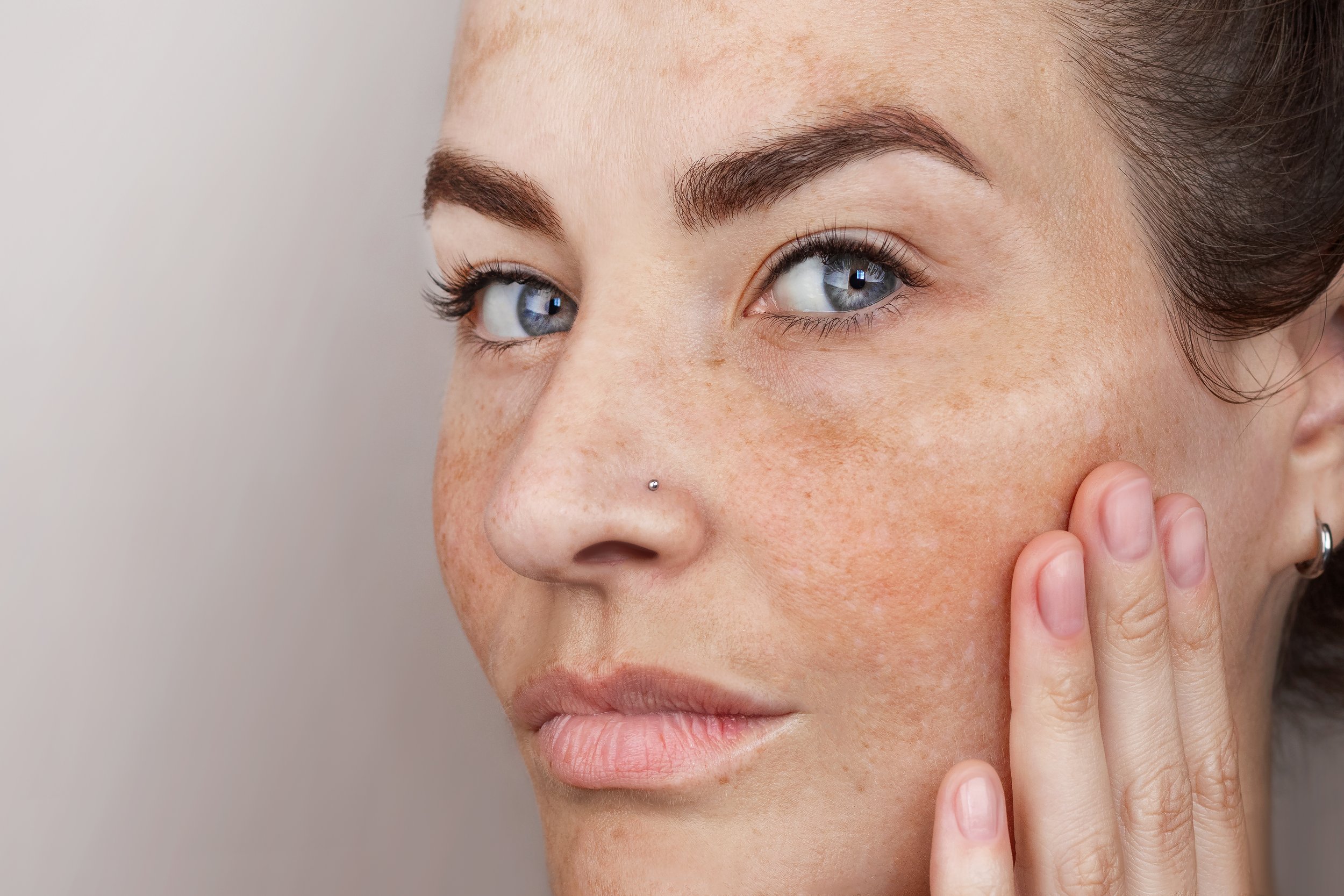
Yes, certain types of pigmentation can respond very well to IPL.
IPL has been used extensively for benign pigmented concerns, particularly superficial pigmentation caused by sun exposure. Research supports its use for concerns including solar lentigines, the flat brown marks often referred to as sunspots or age spots.
You might notice:
Individual brown spots
Freckles that have become more noticeable
Areas of visible sun damage
Patchy, uneven-looking pigment
Skin tone that looks less clear than it once did
During treatment, light is absorbed by suitable pigment within the skin.
Following IPL, those areas can temporarily look darker or more obvious before gradually fading as the treated pigment is cleared.
That initial darkening can actually be an expected part of the treatment response.
But Not Every Brown Mark Should Be Treated With IPL
This is really important.
“Pigmentation” is an umbrella term rather than one single condition.
Different types of pigment behave differently, and some forms of pigmentation can actually become worse if treated incorrectly.
Your skin type also matters because melanin within normal skin can absorb light energy. Darker skin types may carry a greater risk of unwanted pigment changes or burns with some IPL settings, so careful assessment and appropriate treatment selection are essential.
That is why we don’t simply see a brown mark and reach for IPL.
We assess it first.
What About Sun Damage and Age Spots?
This is one of the areas where IPL can be particularly useful.
Years of sun exposure can gradually create visible changes in the skin, even if you were never someone who deliberately sunbathed.
You might notice:
Brown sunspots
Freckling
Uneven tone
Redness
A generally mottled appearance
Skin that looks less clear or fresh
IPL is widely used for signs of photoageing, which essentially means visible skin changes caused by cumulative exposure to light, particularly ultraviolet radiation.
That makes it particularly interesting for patients who say:
“My skin just looks more sun-damaged than it used to.”
We may not be targeting one single spot.
Instead, IPL Photo Rejuvenation can be used to improve the overall appearance of uneven colour and visible sun-related change.
Can IPL Help Facial Redness?
Yes, selected forms of facial redness and visible blood vessels are another established use for IPL.
IPL can target haemoglobin, the pigment contained within blood.
When suitable wavelengths of light are absorbed by a visible vessel, that energy is converted into heat. This can cause the vessel to coagulate and gradually become less visible.
IPL may therefore be considered for concerns such as:
General facial redness
Small visible vessels
Broken-looking capillaries
Redness around the nose or cheeks
Areas of flushing
Selected vascular marks
One of the benefits of IPL is that it can cover a wider area than a treatment aimed at just one tiny vessel, which can make it useful when redness is more widespread.
Is IPL Good for Rosacea?
This one needs a little more nuance.
IPL is commonly used to reduce visible redness and blood vessels associated with rosacea, and there is established clinical use of IPL for vascular and rosacea-related concerns.
But rosacea is more than redness alone.
It is a chronic inflammatory skin condition that can present differently from one person to another.
So if somebody comes to us saying, “I think I have rosacea”, our first priority isn’t immediately booking IPL.
We need to understand:
What symptoms you experience
What triggers them
Whether you already have a diagnosis
Your current skincare
What else may be contributing to the redness
For the right patient, IPL may form part of the plan.
For somebody else, managing the skin barrier or taking another approach may need to come first.
What About Redness Around the Nose?
This is another really common concern.
Tiny vessels around the nose can become increasingly noticeable over time and can be difficult to disguise, even with makeup.
IPL may be suitable for some of these superficial vascular concerns.
However, the exact treatment we recommend depends on the size, depth and type of vessel.
SkinFirst also offers other treatments for selected thread veins, so we can choose the approach that makes the most sense rather than assuming IPL is always the answer.
Can IPL Improve General Skin Quality?
This is where IPL Photo Rejuvenation comes in.
You don’t necessarily need one obvious brown spot or visible vessel to consider IPL.
Sometimes patients simply notice that their skin looks:
Less even
Duller
More mottled
Sun damaged
Less refined than it used to
IPL has an established role in photorejuvenation and the treatment of signs associated with photoageing.
Depending on your starting concern, treatment may help create a complexion that looks clearer, more even and fresher overall.
That doesn’t mean IPL will dramatically change your skin overnight.
The aim is improvement rather than perfection.
Does IPL Treat Fine Lines and Pores?
This needs realistic expectations.
IPL Photo Rejuvenation may help improve the overall appearance and quality of photoaged skin, and some patients may notice improvements in texture alongside changes in pigmentation and redness.
However, if your main concern is:
Deeper lines
Acne scarring
Pronounced enlarged pores
Significant textural change
We may recommend something more targeted, such as microneedling or RF microneedling.
One treatment doesn’t need to do everything.
Often, choosing the treatment that best matches the concern gives us a much more sensible plan.
Can IPL Help Acne?
UltraLux Pro includes a dedicated IPL Acne Management application.
Light-based treatments have been used as part of acne management, but acne is complicated and there is rarely one universal treatment.
If your main concern is breakouts, we would want to look at:
The type of acne present
How active it is
Your skincare
Previous treatments
Whether scarring or pigmentation is also present
Your wider skin history
IPL may form part of a treatment plan for suitable patients, but it won’t automatically be our first recommendation for everybody with acne.
That is particularly important at SkinFirst because Nurse Jenni’s approach is centred around understanding the skin first rather than treating the symptom in isolation.
What Can’t IPL Treat?
Just as importantly, IPL is not suitable for every skin concern.
Depending on your individual skin, another treatment may be more appropriate for:
Deep acne scarring
Significant skin laxity
Deep lines and wrinkles
Certain types of pigmentation
Suspicious or changing pigmented lesions
Concerns that require medical assessment rather than cosmetic treatment
We also need to consider skin tone, recent sun exposure, medications, medical history and other factors before recommending IPL.
That is why consultation matters.
What Happens to Pigmentation After IPL?
This sometimes surprises people.
Following pigmentation treatment, brown areas may initially become darker rather than lighter.
They can look more noticeable for a short period before gradually fading as the skin responds.
Temporary redness, warmth and mild swelling can also occur following IPL. Other recognised potential side effects include blistering and changes in pigmentation, although appropriate treatment selection and settings are designed to minimise risk.
We’ll explain what to expect before treatment and give you appropriate aftercare guidance.
How Many IPL Treatments Will I Need?
It depends entirely on what we’re treating.
Some concerns may show visible improvement after relatively few treatments, while others are better approached as a course.
Factors include:
Your starting skin condition
The type of pigmentation or redness
The size of the area
Your skin type
How your skin responds
The result you are hoping to achieve
We won’t give everybody the same treatment schedule simply because they are having IPL.
Your plan should be based on your skin.
IPL for Pigmentation or a Chemical Peel?
Both can be useful, but they work very differently.
IPL uses light energy and may be particularly useful for selected visible pigmentation, sun damage and redness.
Chemical peels use carefully selected acids to create controlled exfoliation and can be helpful for concerns including uneven tone, texture, breakouts and certain forms of pigmentation.
There are times when IPL makes more sense.
There are times when a peel makes more sense.
And sometimes a wider treatment plan may involve more than one approach over time.
IPL or Microneedling?
Again, it comes down to what you actually want to improve.
IPL is particularly useful when colour is the problem, brown pigment, redness or visible sun damage.
Microneedling is generally more focused on texture and collagen remodelling, making it useful for concerns such as acne scarring, pores, fine lines and uneven texture.
An easy way to think of it is:
Colour concern? IPL may be worth exploring.
Texture concern? Microneedling may be more appropriate.
Of course, real skin doesn’t always fit neatly into one box, which is why your consultation determines the final plan.
IPL Skin Treatments With UltraLux Pro at SkinFirst
At SkinFirst, we use the UltraLux Pro for our advanced IPL treatments.
Our IPL skin applications include:
IPL Pigmentation Correction
For suitable pigmentation, brown spots and visible sun damage.
IPL Vascular Therapy
For selected facial redness and visible vessels.
IPL Acne Management
For appropriate breakout-prone skin as part of a considered treatment plan.
IPL Photo Rejuvenation
For general visible sun damage and a clearer, more even-looking complexion.
The benefit of having different treatment applications is that we don’t have to use one approach for every concern.
And that is exactly how we want to treat skin.
So, Is IPL Right for My Skin?
Possibly, but you don’t need to work that out yourself.
You don’t need to arrive at SkinFirst knowing whether you require:
IPL Pigmentation Correction, Vascular Therapy, Photo Rejuvenation or something completely different.
You just need to tell us what you’ve noticed.
Maybe it’s:
“These brown patches have appeared over the last few years.”
“I hate the redness around my cheeks and nose.”
“My skin looks really sun damaged.”
“My complexion just isn’t as clear as it used to be.”
From there, Nurse Jenni can assess your skin and recommend what is genuinely appropriate.
Sometimes that will be IPL.
Sometimes another treatment will make more sense.
And we think knowing the difference is far more important than simply having lots of treatments to choose from.
IPL Skin Treatments in Warrington
If pigmentation, facial redness or visible sun damage is bothering you, the best place to start is with a skin consultation.
At SkinFirst in Warrington, we’ll assess what’s happening with your skin, explain your options and create a treatment plan based on what you actually need.